top of page

New England Weavers' Seminar:  2027 Workshops

Filter By

Classes for anyone (with or without weaving experience)
Classes for people who want to learn to weave
Classes for people who have woven a little and want to improve
Classes for weavers who want to be challenged
Tablet weaving classes (with John Mullarkey)
Classes requiring a loom
Color classes
History classes
“Make & Take” classes
Sewing / Garment Construction / Finishes
Spinning classes
Doubleweave techniques

A-1

Finding Inspiration in Your Yarn Stash 

Karen Donde

Duration

1/2 day

Start Date and Time

End Date and Time

Cost

Thursday, July 29, 2027 at 12:30:00 PM UTC

Thursday, July 29, 2027 at 3:30:00 PM UTC

$80.00

Instructor

Staring at your yarn stash deciding what to weave next, your eyes land on a cone you bought at a fiber fair in 2008. You loved it then, and you love it now, but it remains on the shelf. Or you still have a small quantity of a precious, expensive yarn, but don’t know how to combine it with other yarns so it plays the starring role in the design. Maybe your yarn stash has simply reached critical mass, and you need to use it up so you can order more. This seminar will help you use the yarn you have as design inspiration. Bring a few “challenge” yarns with you, and leave with one or more project ideas. We will: -Evaluate the qualities and properties of the yarns you’ve brought. -Share ideas about the best project for them with other participants. -Learn ways to combine your stash yarns with other yarns. -Play with color mixing -Discuss weave structures that allow feature yarns to shine.

Experience Level

All levels

Materials List

Several yarns from your stash you don't know how to use. –  Sketch pad and pencil –  Colored pencils –  A few weaving magazines with drafts

Provided by Instructor

Yarn samples for exercises, some handouts and design tools; most handouts will be emailed for printing in advance

Materials Fee

$5.00

A-2

Introduction to Ply-Split Braiding

Becky Jensen

Duration

1/2 day

Start Date and Time

End Date and Time

Cost

Thursday, July 29, 2027 at 12:30:00 PM UTC

Thursday, July 29, 2027 at 3:30:00 PM UTC

$80.00

Instructor

Looking for a portable form of weaving? Consider braiding - ply-split braiding to be exact. How can something associated with camels not be portable or fascinating? This weaving technique keeps your hands busy, allows you to easily complete a small project in a few hours, and makes you productive all with a gripfid and a bit of cord that practically fit in your pocket. Patterns, beginnings/finishes, and variations in cord splitting abound in this introduction to ply-split braiding.

Experience Level

None required

Materials List

Scissors. Paper and writing implement for note taking. A 4.5mm gripfid (may be purchased or borrowed in class).

Provided by Instructor

Materials fee covers prepared cords cut to the appropriate length and handouts. Gripfids may be borrowed from the instructor or purchased for $10.

Materials Fee

$10.00

A-3

Rep Weave:  Books, Bags, and Boxes

Lucienne Coifman

Duration

1/2 day

Start Date and Time

End Date and Time

Cost

Thursday, July 29, 2027 at 12:30:00 PM UTC

Thursday, July 29, 2027 at 3:30:00 PM UTC

$80.00

Instructor

Experience Level

All levels

Materials List

Provided by Instructor

Materials Fee

A-4

Rep Weave:  Books, Bags, and Boxes

Lucienne Coifman

Duration

1/2 day

Start Date and Time

End Date and Time

Cost

Thursday, July 29, 2027 at 12:30:00 PM UTC

Thursday, July 29, 2027 at 3:30:00 PM UTC

$80.00

Instructor

Rep weave is a very linear weave whose rib structure lends itself easily to bending and folding into useful shapes. We will review the fundamentals of rep weave and explore how to build 3-dimensional pieces using special material. The last hour will be spent building a sewing needle case or "etui". Each student will receive a bag containing all the necessary elements.  

Experience Level

No experience needed

Materials List

paper / pencil

Provided by Instructor

hand out, all the material to make a sewing kit

Materials Fee

$15.00

B-1

Ply-Split Mug Rugs

Becky Jensen

Duration

1/2 day

Start Date and Time

End Date and Time

Cost

Thursday, July 29, 2027 at 5:30:00 PM UTC

Thursday, July 29, 2027 at 8:30:00 PM UTC

$80.00

Instructor

Starting to feel comfortable with a gripfid and wanting to try your hand at something other than ply-split key rings or bracelets? Using SCOT (single-course oblique twining) and a bit of POT (plain oblique twining), you’ll explore how to make a mug rug while expanding your repertoire of ply-splitting skills. Please note: There will be some overlap between this workshop and the 3-D ply-split workshop. This workshop is designed as an advanced beginner course for the student who does not have time to take the two day 3-D course.

Experience Level

none required

Materials List

Scissors. Paper and writing implement for note taking. A 4.5mm gripfid (may be purchased or borrowed in class).

Provided by Instructor

Materials fee covers prepared cords and handouts. Gripfids may be borrowed from the instructor, or purchased for $10.

Materials Fee

$10.00

B-2

Interacting with Color: A Practical Guide to Josef Albers's Color Experiments

Fritz Horstman

Duration

1/2 day

Start Date and Time

End Date and Time

Cost

Thursday, July 29, 2027 at 5:30:00 PM UTC

Thursday, July 29, 2027 at 8:30:00 PM UTC

$80.00

Instructor

Working from Josef Albers's groundbreaking book "Interaction of Color," and Horstman's companion book "Interacting with Color: A Practical Guide to Josef Albers's Color Experiments," participants will explore ideas such as color relativity, the illusion of transparency, after-image, and more.

Experience Level

No experience needed

Materials List

none

Provided by Instructor

Color aid paper

Materials Fee

$10.00

B-3

Introduction to Network Drafting

Robyn Spady

Duration

1/2 day

Start Date and Time

End Date and Time

Cost

Thursday, July 29, 2027 at 5:30:00 PM UTC

Thursday, July 29, 2027 at 8:30:00 PM UTC

$80.00

Instructor

Network-drafted twills are a versatile method for creating flowing, curved designs in woven textiles on as
few as four shafts. In this three-hour seminar, participants will learn the fundamentals of designing
network-drafted patterns, including key concepts such as the initial, grid, and network.
Building on this foundation, participants will engage in hands-on exercises using two different methods to
explore network drafting techniques and their applications. By the end of the session, attendees will have
a solid understanding of network drafting principles and the confidence to begin creating their own
designs either by hand or using weaving software.

Experience Level

Ability to read a draft

Materials List

Pen or pencil for taking notes

Provided by Instructor

Printed and spiral-bound handout island worksheets

Materials Fee

$5.00

C-1

Untangling Tied Weaves, Beiderwand, & Lampas

Robyn Spady

Duration

1/2 day

Start Date and Time

End Date and Time

Cost

Friday, July 30, 2027 at 12:30:00 PM UTC

Friday, July 30, 2027 at 3:30:00 PM UTC

$80.00

Instructor

In the weaving world, tied weaves, Beiderwand, and lampas are bewildering and sometimes mislabeled. While they can appear deceptively similar on the surface, each weave has distinct characteristics that shape its structure, design potential, and weaving approach. In this three-hour class, we’ll untangle their relationships by examining each weave on its own terms by exploring structural frameworks, advantages and limitations, and the subtle overlaps alongside the significant differences. Through side-by-side comparison and close analysis, you’ll learn to identify the structural “tells” each weave reveals on the loom and in finished cloth. By the end of the session, you’ll have a clearer understanding of how these weaves function, and the confidence to choose intentionally between them based on your design goals and loom setup.

Experience Level

Ability to read a draft

Materials List

Pen or pencil for taking notes

Provided by Instructor

Printed and spiral-bound handout including all of the weaves, concepts, etc. shared during the class

Materials Fee

$5.00

D-1

Double Weave Trivets

Diane Villano

Duration

1/2 day

Start Date and Time

End Date and Time

Cost

Friday, July 30, 2027 at 5:30:00 PM UTC

Friday, July 30, 2027 at 8:30:00 PM UTC

$80.00

Instructor

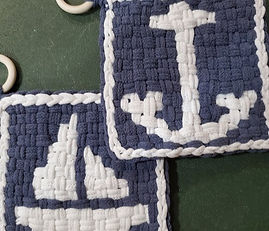
Explore the magic of the double weave, creating two sides of the trivet at the same time, and bringing the color of the back to the front. These designs also feature a double bind off edge. Use a 10" square metal loom and your choice of color ways. You'll complete at least one in class and be able to finish the second in your studio.

Experience Level

No experience needed

Materials List

Embroidery scissors

Provided by Instructor

U.S. made 10" metal peg loom, 100% cotton loops from a New England mill, two metal hooks, printed weaving charts

Materials Fee

$40.00

D-2

Design Creativity: Curating Your Personal Weaving Toolbox

Robyn Spady

Duration

1/2 day

Start Date and Time

End Date and Time

Cost

Friday, July 30, 2027 at 5:30:00 PM UTC

Friday, July 30, 2027 at 8:30:00 PM UTC

$80.00

Instructor

Many weavers reach a point where their technical skills are solid, yet design decisions begin to feel stale,
inconsistent, or difficult to move beyond familiar solutions. This three-hour class focuses on developing a
personal “toolbox” for advancing design insight and translating ideas into cloth with greater clarity, intention,
and control.
Inspired weaving doesn’t come from more drafts or more shafts so much as from cultivating a reliable set of
design tools and strategies. In this session, you’ll explore and begin building your own toolbox, a repeatable
collection of approaches you can use to move from a spark of inspiration to a woven plan you trust.
We’ll focus on practical ways to strengthen design thinking, including recognizing and manipulating pattern,
defining and transforming blocks, and incorporating color with greater confidence. Emphasis will be placed on

Once completed, please download as a .pdf (from the File menu), save, and email your completed form to
sarawhite652@gmail.com/.

Thank you for your assistance in creating a smooth operation!
methods for generating ideas, refining drafts, and expanding a single concept into multiple design possibilities
rather than settling on the first workable solution.
This class is about sharpening perception as much as technique. You’ll leave with a clearer framework for
decision-making, a more articulate design vocabulary, and a personalized set of strategies to help push your
weaving to the next level on any loom and within any structure.

Experience Level

Ability to read a draft

Materials List

Pen or pencil for taking notes

Provided by Instructor

Printed and spiral-bound handout including all of the weaves, concepts, etc. shared during the class

Materials Fee

$5.00

E-1

Split Loop Trivets

Diane Villano

Duration

1/2 day

Start Date and Time

End Date and Time

Cost

Saturday, July 31, 2027 at 12:30:00 PM UTC

Saturday, July 31, 2027 at 3:30:00 PM UTC

$80.00

Instructor

The split loop method of weaving trivets offers the possibility of more detailed design work than standard weaves. On a
10" square metal loom, use each strand of the loop separately. In your choice of color ways, you'll complete at least one
in class and be able to finish the second in your own studio.

Experience Level

No experience needed

Materials List

Embroidery scissors

Provided by Instructor

U.S. made 10" metal peg loom, 100% cotton loops from a New England mill, two metal hooks, printed weaving charts

Materials Fee

$40.00

E-2

A Weaver’s Smörgåsbord - A Buffet of Intriguing Weaves from Four to Eight Shafts

Robyn Spady

Duration

1/2 day

Start Date and Time

End Date and Time

Cost

Saturday, July 31, 2027 at 12:30:00 PM UTC

Saturday, July 31, 2027 at 3:30:00 PM UTC

$80.00

Instructor

Not every weave fits neatly into a category or warrants an entire seminar devoted solely to itself. Yet some
drafts are simply too delightful, too clever, or too visually compelling to ignore. This lively three-hour class
serves up a curated collection of intriguing weaves that deserve a closer look.
Think of this session as a tasting menu of Robyn’s favorite four- to eight-shaft discoveries. We’ll explore
versatile weaves that adapt beautifully to a variety of projects, including one-, two-, and four-color parallel
twills. Some examples may be historical curiosities, others modern adaptations, but all are chosen for their
ability to spark ideas and inspire future projects.
Designed as an idea-generating, possibility-expanding experience, this class will refresh your creative thinking
and broaden your structural vocabulary. It’s perfect for weavers eager to add new “flavors” to their design
repertoire without committing to a single technique for an entire class.

Experience Level

Ability to read a draft

Materials List

Pen or pencil for taking notes

Provided by Instructor

Printed and spiral-bound handout including all of the weaves shared during the class

Materials Fee

$5.00

F-1

Tour of Fashion Exhibit

Robyn Spady

Duration

1/2 day

Start Date and Time

End Date and Time

Cost

Saturday, July 31, 2027 at 5:30:00 PM UTC

Saturday, July 31, 2027 at 8:30:00 PM UTC

$80.00

Instructor

Experience Level

none

Materials List

Provided by Instructor

Materials Fee

G-1

Gallery Exhibit Tour

Suzi Ballenger

Duration

1/2 day

Start Date and Time

End Date and Time

Cost

Sunday, August 1, 2027 at 12:30:00 PM UTC

Sunday, August 1, 2027 at 3:30:00 PM UTC

$80.00

Instructor

Experience Level

none

Materials List

Provided by Instructor

Materials Fee

G-2

Planning for Your Fiber Studio's Future:  Estate & Emergency Planning for Maker Spaces

Sara Bixler

Duration

1/2 day

Start Date and Time

End Date and Time

Cost

Sunday, August 1, 2027 at 12:30:00 PM UTC

Sunday, August 1, 2027 at 3:30:00 PM UTC

$80.00

Instructor

Join us for a crucial and insightful seminar dedicated to securing the future of your most cherished space: your fiber studio. For makers and crafters, a studio is more than just a workspace—it's a valuable collection of materials, equipment, intellectual property, and artistic legacy. This session will provide essential, step-by-step guidance on estate planning specifically tailored for the creative professional. This seminar will cover the practical and often overlooked necessities of studio planning. We will focus on two key areas. First, we will show you how to create an accurate and comprehensive inventory of your assets, from looms and spinning wheels to yarn stashes and fiber collections. Crucially, you will learn organization and documentation strategies that ensure any loved one or executor, regardless of their crafting knowledge, can easily navigate and understand your inventory. This includes digital organization of drafts, patterns, and design files, as well as necessary legal information regarding intellectual property and insurance coverage. Second, we will tackle disaster preparedness, offering actionable plans and strategies to protect your valuable assets from natural disasters such as flood, fire, or other catastrophic events. Whether you are planning for the smooth transfer of your collection to the next generation, protecting your assets from unforeseen events, or simply bringing organization to your current space, this workshop is designed to provide peace of mind and preserve your creative legacy.

Experience Level

No experience needed

Materials List

Notebook with pen or pencil

Provided by Instructor

Attendees will receive a comprehensive seminar packet, including exclusive worksheets, helpful resource guides, and checklists to begin or refine their own studio plan immediately. 

Materials Fee

$20.00

G-3

Theo Moorman, Basics and Beyond

Sara Nordling

Duration

1/2 day

Start Date and Time

End Date and Time

Cost

Sunday, August 1, 2027 at 12:30:00 PM UTC

Sunday, August 1, 2027 at 3:30:00 PM UTC

$80.00

Instructor

In this talk you will learn about who Theo Moorman was and how to draft and use her innovative technique. The basics of her process will be shown as well as examples of what the technique lends itself to creatively. We will also talk about going beyond the 4 shaft technique she developed into its use in a multi-shaft format. Knowledge of draft reading is a plus for understanding this class.

Experience Level

Ability to read a weaving draft, Ability to read, create and adapt a weaving draft, It's helpful to have the ability to create and adapt a draft, it's essential to know how to read one.

Materials List

Note taking material

Provided by Instructor

Handout

Materials Fee

$2.00

G-4

Lacing Up: Create Your Own Handspun Shoelaces and Decorative Cords

Alanna Wilcox

Duration

1/2 day

Start Date and Time

End Date and Time

Cost

Sunday, August 1, 2027 at 12:30:00 PM UTC

Sunday, August 1, 2027 at 3:30:00 PM UTC

$80.00

Instructor

Are you looking for a fun and practical way to use your handspun yarn? In this workshop, Alanna will show you how to spin strong, durable cabled yarns and transform them into custom shoelaces and decorative cords. You'll learn how cable yarn construction creates strength, durability, and resistance to abrasion, making it ideal for shoelaces, hoodie ties, drawstrings, decorative cords, and other functional projects. Through hands-on spinning and construction techniques, you'll explore how yarn structure influences performance and discover how small changes in your spinning can dramatically affect the finished result. Alanna will guide you through the process of creating cord-worthy yarns, constructing cable yarns, and finishing them into useful projects you can take home and use. Along the way, you'll gain a better understanding of how to spin for strength, balance, and durability while expanding your options for practical handspun projects. You'll leave with the knowledge and confidence to create your own custom shoelaces and decorative cords, along with ideas for incorporating these techniques into future spinning projects.

Experience Level

Intermediate. Students should be comfortable spinning a continuous yarn and have prior plying experience.

Materials List

• Working spinning wheel, electric spinner, or drop spindle • Be sure to bring oil and maintenance tools appropriate for your spinning wheel or e-spinner • Tensioning tool if required for your wheel • Lazy kate (tensioned preferred) • 4-5 empty bobbins with leaders • Pen or pencil for notes

Provided by Instructor

• Fiber for spinning • Shoelace finishing materials • Handouts and reference materials

Materials Fee

$18.00

G-5

Turkey Wing Broom

Sue Muldoon

Duration

1/2 day

Start Date and Time

End Date and Time

Cost

Sunday, August 1, 2027 at 12:30:00 PM UTC

Sunday, August 1, 2027 at 3:30:00 PM UTC

$80.00

Instructor

Weave a Turkey Wing Broom with a plaited handle. We will use broomcorn, twine and dyed reed. Assortments of colors will be selected.

Experience Level

No experience needed

Materials List

Scissors or clippers

Provided by Instructor

All materials and written instructions

Materials Fee

$35.00

G-6

A Survey of Embellishment Techniques

Robyn Spady

Duration

1/2 day

Start Date and Time

End Date and Time

Cost

Sunday, August 1, 2027 at 12:30:00 PM UTC

Sunday, August 1, 2027 at 3:30:00 PM UTC

$80.00

Instructor

Taking your cloth, garments, and accessories to the next level can begin on the loom or even continue well beyond it. In this fun three-hour class, we’ll explore a wide range of on-loom and off-loom embellishment
techniques that add both function and expressive detail to garments and accessories. We’ll examine approaches such as inlay, weaver-manipulated lace weaves, warp-encircling methods, buttonhole-less closure solutions, passementerie techniques, and decorative edge treatments. Emphasis will be placed on how these techniques integrate with cloth structure, influence drape and durability, and address practical design challenges such as shaping, fastening, and finishing. Rather than focusing on a single method, this class offers a broad survey designed to spark ideas and expand your awareness of the many possibilities available to you. Whether you’re looking to enhance a commercially made garment or design and construct a Chanel-inspired jacket from scratch, you’ll leave with a foundational understanding of embellishment strategies, greater clarity about when and how to use them, and fresh inspiration for pushing your garments and accessories beyond the expected.

Experience Level

No experience necessary

Materials List

Pen or pencil for taking notes

Provided by Instructor

Printed and spiral-bound handout summarizing the techniques shared during the class

Materials Fee

$5.00

H-1

Here Comes The Sun: Cyanotype Printing on Paper and Fabric

David Heustess

Duration

1 day

Start Date and Time

End Date and Time

Cost

Thursday, July 29, 2027 at 12:30:00 PM UTC

Thursday, July 29, 2027 at 8:30:00 PM UTC

$160.00

Instructor

Discovered in 1842, cyanotype is a slow-reacting, economical photographic printing formulation that produces a cyan-blue print used for art as monochrome imagery. The chemistry can be applied to paper, fabric and prepared surfaces to create photographic images. An affordable and easy to use process, this technique continues today to be popular with artists in a variety of mediums such as art quilts, embroidery, photography, book arts and printmaking. Join Nashville based artist David Heustess to learn how to use the chemistry to create prints using natural and man made objects, design negatives and explore the different effects and materials that can be used to create wonderful works of art in blue.

Experience Level

none

Materials List

small objects from your "junk drawer" especially those with interesting shapes or cut out spaces, gloves if you are sensitive to chemicals, and natural based paper or fabric you want to experiment with, notebook, pen or paper

Provided by Instructor

Cyanotype Chemistry; paper and fabric; assorted objects for use in class, foam brushes, masking tape, ceramic tiles, modge podge or something similar

Materials Fee

$15.00

H-2

Introduction to the Warp-Weighted Loom

Andrea Myklebust

Duration

1 day

Start Date and Time

End Date and Time

Cost

Thursday, July 29, 2027 at 12:30:00 PM UTC

Thursday, July 29, 2027 at 8:30:00 PM UTC

$160.00

Instructor

In this one day, hands-on workshop, participants will get an introduction to the warp-weighted loom, the ancient loom of Europe.  We will have multiple looms set up for students to try, and we will discuss the history of the loom, and how the loom differs from modern handlooms. With hands-on examples, we will learn about the different ways in which warps and heddles are made, how weights are selected and used in the weaving process, and the accessory tools involved in weaving on a warp-weighted loom. This one-day workshop will offer participants an opportunity to get their hands on these unusual (and handsome!) looms, and to learn a bit about how they are built and used. We will look at examples of textiles woven on the WWL, and learn about the history of this very early technology. While a single day workshop is NOT enough time for a participant to weave a project of their own, we hope it will be enough time to whet your appetite for more of this very, VERY old-school weaving.

Experience Level

none

Materials List

Instructor will provide all of the materials required for the workshop.

Provided by Instructor

Instructor will provide all of the materials required for the workshop.

Materials Fee

none

H-3

Swatching for Color and Texture on the Pin Loom

Alanna Wilcox

Duration

1 day

Start Date and Time

End Date and Time

Cost

Thursday, July 29, 2027 at 12:30:00 PM UTC

Thursday, July 29, 2027 at 8:30:00 PM UTC

$160.00

Instructor

Pin looms are quick, portable, and fun tools for creating woven fabric, but did you know they're also powerful tools for exploring color and texture? In this workshop, Alanna Wilcox will show you how to create four unique swatches on a single pin loom while exploring color interactions, yarn texture, and fabric structure. You'll discover how a simple pin loom can help you test ideas before committing to a larger weaving, knitting, crochet, or spinning project. Along the way, you'll explore how different fibers, yarn structures, and color combinations influence the finished fabric and learn practical ways to use pin looms as a design tool in your own creative practice. If you've never woven before, don't worry. Alanna will guide you through the process step by step and help you build confidence as you create your swatches. If you're already an experienced weaver, you'll learn how pin loom swatches can help you evaluate color placement, compare yarns, test project ideas, and make more informed design decisions. You'll leave with four finished swatches, a better understanding of color and texture in woven fabric, and new ideas for incorporating pin looms into future projects.

Experience Level

any level

Materials List

Scissors • Pen or pencil for notes • Masking tape • Optional: Bring a small selection of favorite yarns for experimentation NOTE • Students who already own a compatible pin loom and do not wish to receive an additional loom should contact Alanna no later than one month before the conference. In that case, the materials fee will be reduced to $10 to cover yarn, handouts, and sampling materials.

Provided by Instructor

• Yarn for sampling exercises • Pin loom • Handouts and reference materials

Materials Fee

$60 – To cover the cost of the Pin Loom plus materials brought by the Instructor.

H-4

Pine Bark Baskets

Jennifer Lee

Duration

1 day

Start Date and Time

End Date and Time

Cost

Thursday, July 29, 2027 at 12:30:00 PM UTC

Thursday, July 29, 2027 at 8:30:00 PM UTC

$160.00

Instructor

This style of basket is called a Mokok, which is a Northeast Woodland Native American style container made of bark and stitched with spruce roots. This White Pine bark basket is easier to make than Ash Bark. They don't require so much hand strength, they smell delicious, handle like leather when wet, and dry like wood. The bottom is rectangular. The top is round or oval. They were originally used to harvest and store food and accoutrements. In this class you'll learn to sew with spruce roots, which you'll prepare. If the roots are thick enough you'll split them. An inner and outer rim is made by splitting a Red Osier Dogwood stick that is bent gradually. Different stitching patterns will be suggested. All materials are sustainably and locally harvested by the instructor.

Experience Level

No experience needed

Materials List

Scissors, utility knife, needle nose pliers, four sided awl (which instructor can provide if needed) and a bowl for water

Provided by Instructor

Preformed and soaked white pine bark spruce roots,  Red Osier dogwood

Materials Fee

$70.00

H-5

Community Weaving

Sarah Haskell

Duration

1 day

Start Date and Time

End Date and Time

Cost

Thursday, July 29, 2027 at 12:30:00 PM UTC

Thursday, July 29, 2027 at 8:30:00 PM UTC

$160.00

Instructor

The Mandala Community Weaving, created and designed by artist Sarah Haskell, is a visual symbol of community. Each Mandala Community Weaving grows from the spirit of the group that creates it. From the colors of the weaving, to the representations of people, the completed Mandala Community Weaving is a true reflection and celebration of each community.  In this workshop, Sarah will take participants through the steps involved in creating a Mandala Community Weaving from building the loom, to the weaving, creating the clothespin people and to assembling the completed project. Participants will learn tips on how to organize, promote and offer this project to their own community. A PDF of instructions will be available. Our workshop will conclude with a completed weaving that celebrates the diversity and unity of the participants. Our Mandala Community Weaving will be offered to a local charity/nonprofit as a gift. 

Experience Level

All levels welcome

Materials List

List provided of materials to populate figures; NEWS volunteers will fulfill.  

Provided by Instructor

Pre-built mandala loom for finishing and populating with figures.  Glue guns.  

Materials Fee

none

H-6

Sewing Seam and Edge Finishes for Handwoven Fabrics

Emily Skolfield

Duration

1 day

Start Date and Time

End Date and Time

Cost

Thursday, July 29, 2027 at 12:30:00 PM UTC

Thursday, July 29, 2027 at 8:30:00 PM UTC

$160.00

Instructor

Using commercial or handwoven material, students will practice several techniques for securing edges and creating seams. By the end of the workshop, each person will have created a booklet or binder that contains
instructions and information related to the different techniques along with the samples. If time permits students will undertake a small project.

Experience Level

beginner but comfortable with your sewing machine

Materials List

Sewing kit to include scissors, thread, pins, hand sewing needles, 3-4 fat quarters of material and handwoven material is also good.

Provided by Instructor

Directions and reference material, bias binding, zippers for project, piping,

Materials Fee

$20.00

H-7

Tablet Weaving: Threaded-in designs

John Mullarkey

Duration

1 day

Start Date and Time

End Date and Time

Cost

Thursday, July 29, 2027 at 12:30:00 PM UTC

Thursday, July 29, 2027 at 8:30:00 PM UTC

$160.00

Instructor

Welcome to weaving with cards! Using simple tools, we’ll start weaving a band that can be used as a lanyard, lace, or bracelet. We will begin with a discussion on how to read tablet weaving drafts. Then we will proceed to setting up the cards, weaving the band, and end with a discussion of finishing techniques. Along the way, we will focus on avoiding common pitfalls and sharing tips and tricks for weaving perfect bands. For those interested in learning how to tablet weave.

Experience Level

No experience needed

Materials List

Inkle style loom (Note: Ashford Inklet is too small for tablet weaving), 20 4-hole cards, belt shuttle, scissors, three balls or cones of 5/2 to 10/2 mercerized or unmercerized cotton or #10 crochet thread in three different colors (a light, medium, and dark color are best). At least ½ ounce of each.

Provided by Instructor

Materials Fee

none

J-1

Kami-Ito Today:  The Japanese Art of Paper Spinning and Contemporary Applications

Sarah Haskell

Duration

1 day

Start Date and Time

End Date and Time

Cost

Friday, July 30, 2027 at 12:30:00 PM UTC

Friday, July 30, 2027 at 8:30:00 PM UTC

$160.00

Instructor

The technique of spinning rice paper into thread known as Kami-ito was developed in Japan during the 11th century.  In this workshop we will learn how to take a sheet of paper and spin it into thread using a drop spindle and/or a wheel. With our newly spun paper thread, we will create a small weaving, celebrating new skills and honoring ancient techniques. We will explore the wide variety of papers (including coffee filters!) that can be used for creating Kami-ito, as well as some contemporary applications of dyed, knitted, woven or crocheted Kami-ito thread. Sarah will share the history and lore behind this fascinating art of paper thread as well as some of the ways she uses this thread in her art and community art projects. Samples of handspun threads as well as pieces of fabric and art created with his amazingly durable thread will be available for inspiration.

Experience Level

No experience necessary

Materials List

All materials provided by instructor; participants are welcome to bring a favorite drop spindle or wheel

Provided by Instructor

A wide variety of papers to spin, Some cutting pads, knives, rulers and other tools available for communal use. Simple drop spindle can be provided for an additional $8

Materials Fee

$8.00

J-2

Drafting Demystified

Krysten Morganti

Duration

1 day

Start Date and Time

End Date and Time

Cost

Friday, July 30, 2027 at 12:30:00 PM UTC

Friday, July 30, 2027 at 8:30:00 PM UTC

$160.00

Instructor

The draft is the primary format weavers have used to record patterns for centuries, and weavers of this era are blessed with a host of resources and computer-based tools to help manage that aspect of design. This can leave us feeling that drafts are mysterious, magical things. When we rely on modern tools, we may develop only a superficial sense of how and why a draft creates a certain pattern. With deeper understanding, we can be more adventurous about making adjustments or combining elements of multiple drafts to create a personalized design. This class is geared towards weavers who can follow a draft but lack confidence modifying one for their own purposes. We will review all the parts of a draft and what they do, create drawdowns by hand, and discuss why certain threadings, tie-ups, and treadlings work well together. We'll do a deeper dive into a few favorite weave structures to discover what their drafts tell us about how they work. This is a pencil-and-paper workshop where you will be put to work creating, predicting, and puzzling out the connections between the draft and the cloth.

Experience Level

Ability to read a weaving draft

Materials List

Pencils with good erasers  (colored pencils, graph paper and ruler optional)

Provided by Instructor

Photocopies

Materials Fee

$10.00

J-3

Tablet Weaving: Sulawesi Designs

John Mullarkey

Duration

1 day

Start Date and Time

End Date and Time

Cost

Friday, July 30, 2027 at 12:30:00 PM UTC

Friday, July 30, 2027 at 8:30:00 PM UTC

$160.00

Instructor

Come learn a tablet weaving technique from Indonesia! Bands created on the island of Sulawesi in Indonesia have beautiful patternwork and color interactions. Similar in structure to a double-faced weave, but similar in pattern to diagonal weaves, this technique will definitely keep your interest. We will cover how to weave these patterns, and how to design your own.

Experience Level

Some tablet weaving experience

Materials List

Inkle style loom (Note: Ashford Inklet is too small for tablet weaving), 20 4-hole cards, belt shuttle, scissors, four balls or cones of 5/2 to 10/2 mercerized or unmercerized cotton or #10 crochet thread. Two balls in the same medium color, one in a dark color, and one in a light color. That is four yarn sources in three colors.  At least ½ ounce of each.

Provided by Instructor

Materials Fee

none

J-4

Exploring Twills on a Rigid Heddle Loom

Katie Strano

Duration

1 day

Start Date and Time

End Date and Time

Cost

Friday, July 30, 2027 at 12:30:00 PM UTC

Friday, July 30, 2027 at 8:30:00 PM UTC

$160.00

Instructor

In this class, weavers will learn how to dress their looms for a twill sampler. We will use two rigid heddle reeds
to create 3/1 twills using three different threadings. We will then explore various weaving sequences to create
a variety of twill patterns. We will discuss how a three-shaft twill pattern can be converted into a rigid heddle
pattern. We will also touch on how four-shaft twills can be woven on a rigid heddle loom using three reeds, and
there will be a demo loom set up for weavers to try this more complex method. Students will leave class with a
woven twill sampler to inspire future projects.

Experience Level

Intermediate/advanced

Materials List

Equipment Needed:
● Rigid Heddle Loom
● Two Rigid heddle Reeds of the same dpi. Preferably two 7.5 dpi or 8 dpi, depending on loom
manufacturer, but two 10 dpi could would as well.
● At least one stick shuttle
● Sley hook/threading tool
● Scissors
● Warping peg and loom clamps
Yarn Needed to Bring:
● Warp yarn: 336 yards of yarn that can be comfortably placed at a set in the range of 10-12 ends per
inch. Choose something that isn’t too sticky since it will have to be traveling through two reeds with
multiple pieces of yarn through one dent. (If using 10 dpi reeds, choose yarn that can be placed at
12-15 epi)
● Weft yarn: 220 yards of yarn in a different color from the warp. Stash busting is encouraged here.

Provided by Instructor

Students will receive an in-depth handout with step-by-step color pictures and instructions.

Materials Fee

$10.00

K-2

Bobbin Lace Bijoux

Carolyn Wetzel

Duration

1 day

Start Date and Time

End Date and Time

Cost

Saturday, July 31, 2027 at 12:30:00 PM UTC

Saturday, July 31, 2027 at 8:30:00 PM UTC

$160.00

Instructor

In this class you will fabricate a strip of bobbin lace, with or without beads, that can be made into a lovely bijou: a bracelet, key ring strap, or clothing adornment. By doing this simple project you will learn how to wind the bobbins, prepare the pattern, dress the lace pillow, and use basic bobbin lace techniques. Open to beginners and beyond, with pattern choice based on experience level.

Experience Level

Beginner

Materials List

*The instructor will send a more detailed description of tools and supplies well in advance of class, including inexpensive DIY options.* Thread: 1-3 colors of size 40 crochet cotton (such as Lizbeth), approx. 2 yards per pair of bobbins; 16 (8 pairs) of lace bobbins; Bobbin lace pillow, 16-20 inches diameter (flat, slightly domed, or roller style); 0.6mm crochet hook (steel hook size 12); Straight pins: Approx.150 #17 Satin or silk pins, or any small-head straight pin about 0.6 - 0.7 mm dia x 26-38 mm long; Corsage or ball-head straight pins: 3 or 4 of these for general use; 1 cover cloth (fine woven dishtowel or quilt fabric fat quarter will work); Non-skid pad (e.g., rubberized shelf liner) to put under the lace pillow; Pin cushion; Thread scissors; Pin vise with #8-9 sharp needle inserted. If you don’t have one, you can use a corsage pin for the same purpose. Don’t buy one for class, wait until you see the options that are specific for lace makers; Portable light and extension cord or extra batteries; Magnifier if you usually need one for needlework.

Provided by Instructor

Handouts, pattern, seed beads, metallic threads, findings for bracelet or key fob.

Materials Fee

$10.00

K-3

Tablet Weaving: Two-sided Delights

John Mullarkey

Duration

1 day

Start Date and Time

End Date and Time

Cost

Saturday, July 31, 2027 at 12:30:00 PM UTC

Saturday, July 31, 2027 at 8:30:00 PM UTC

$160.00

Instructor

Have you ever wished you could weave almost any design into a woven band? Or how about weaving a message without pick-up? Double-sided tablet weaving is for you then. This technique creates a two-color band with almost any figure or letters woven into it. This technique does require focus and concentration to weave however, as we will be following charts to turn individual cards to produce patterns.

Experience Level

Some tablet weaving experience

Materials List

Inkle style loom (Note: Ashford Inklet is too small for tablet weaving), 20 4-hole cards, belt shuttle, scissors, four balls or cones of 5/2 to 10/2 mercerized or unmercerized cotton or #10 crochet thread. Each ball should be at least 1 ounce. Two balls of one color, and two balls of one different highly contrasting color. There will not be time in class to wind off, so please come prepared with four yarn sources.

Provided by Instructor

Materials Fee

none

N-1

Weaving a Three-Dimensional Mask with Manipulated Warps

Linda Rhynard

Duration

1 1/2 days

Start Date and Time

End Date and Time

Cost

Saturday, July 31, 2027 at 12:30:00 PM UTC

Sunday, August 1, 2027 at 3:30:00 PM UTC

$240.00

Instructor

Experience Level

Materials List

Provided by Instructor

Materials Fee

N-2

Doubleweave Blanket on a Rigid Heddle Loom

Katie Strano

Duration

1 1/2 days

Start Date and Time

End Date and Time

Cost

Saturday, July 31, 2027 at 12:30:00 PM UTC

Sunday, August 1, 2027 at 3:30:00 PM UTC

$240.00

Instructor

In this class, students will weave a small throw blanket on a rigid heddle loom. We will use two rigid heddle
reeds and pickup sticks to weave two layers of cloth simultaneously, which are connected on one side,
creating a piece of cloth that is double the width of your warp. We will also discuss and go over the variations
on doubleweave that can create a tube, woven slits, and two separate layers. Students should arrive to class
with an empty loom as we will all be warping and preparing the looms together. Please note that we will warp
the loom and learn the doubleweave shuttle sequence, and discuss finishing techniques. However, weaving
double-width is a slow process, and students will then take their looms home to finish weaving the blanket at
their own pace.

Experience Level

Intermediate

Materials List

● WARP: 600 yards (300 yards each of two contrasting colors) of any yarn of your choice
that works with a plainweave sett of 7-8 epi.
● WEFT: 390 yards (195 yards each of the same two yarns as in the warp)of your choice.
● Rigid heddle loom with a weaving width of at least 20”
● Two 7.5 dpi (or 8 dpi, depending on the manufacturer) rigid heddle reeds
● Two pickup sticks – appropriate for weaving at least 20” wide
● Two stick shuttles – at least the weaving width of the cloth
● Sley hook/threading hook
● Warping peg
● Scissors
● Scrap yarn, fabric strips, warping sticks, or your preferred material for the header and footer.

Provided by Instructor

An in-depth 18 page color printed handout with the pattern and detailed step-by-step instructions for preparing
the loom for doubleweave. Students need to bring their own yarn, loom, and weaving equipment.

Materials Fee

$10.00

P-1

Suminagashi and Asian Style Stab Books

David Heustess

Duration

2 days

Start Date and Time

End Date and Time

Cost

Friday, July 30, 2027 at 12:30:00 PM UTC

Saturday, July 31, 2027 at 8:30:00 PM UTC

$320.00

Instructor

On day one, you will explore the art of Suminagashi, water marbling, and create your own designs on paper, fabric and other materials. Day two you will learn three basic stitching patterns of Asian Style Books (soft covered) and then explore how to create your own patterns to stitch. Marbled fabricsabrics can be used to make quilts, covers for hard bound books, scarves, strip weaving etc.

Experience Level

none

Materials List

notebook, pen/pencil, scissors, 12" ruler

Provided by Instructor

Sumi inks and supplies for vats, use of paper cutter, paper, fabric, needles, thread, awls

Materials Fee

$15.00

P-2

3-D Ply-Splitting

Becky Jensen

Duration

2 days

Start Date and Time

End Date and Time

Cost

Friday, July 30, 2027 at 12:30:00 PM UTC

Saturday, July 31, 2027 at 8:30:00 PM UTC

$320.00

Instructor

Ply-splitting started with camel herders spinning goat hair into cords that they then used to fashion girths for saddles and packs. Today artists use a variety of materials to make not only flat pieces, but also three-dimensional ones. We’ll start with a simple basket in perle cotton to get you familiar with making a basket using SCOT (single course oblique twining). We’ll move on to baskets made with other ply-splitting techniques, different materials, color orders, side heights and side shapes. Your final product will be a basket unique to you, your imagination and your ability to ply a gripfid. I will teach you the skills; you will make the creative decisions. By the end of the session you will be equipped with the skills needed to ply-split three dimensional items on your own.

Experience Level

Prior experience w/ ply splitting desirable but not required.

Materials List

Paper and writing implement for note taking. A pair of scissors is useful. A 4.5mm gripfid (may be purchased or borrowed in class).

Provided by Instructor

Materials fee covers prepared cords and handouts. Gripfids may be borrowed from the instructor, or purchased for $10.

Materials Fee

$30 –$ 60 depending on project size. Gripfids may be borrowed from the instructor, or purchased for $10.

P-3

Flax & Hemp to Linen

Andrea Myklebust

Duration

2 days

Start Date and Time

End Date and Time

Cost

Friday, July 30, 2027 at 12:30:00 PM UTC

Saturday, July 31, 2027 at 8:30:00 PM UTC

$320.00

Instructor

In this hands-on workshop, we will explore all of the steps involved in growing, processing, and spinning flax and hemp for weaving. On day one, we will discuss fiber flax and hemp seed selection, current licensing requirements for growing hemp, and how to grow, harvest, and ret these plants for fiber use. We will have retted straw on hand to process straw with brakes, scutching knives and hackles, and participants will have plenty of time to try their hand at using these traditional tools to process bast fibers.  On day two, we will learn how to dress a distaff for spinning long line fibers, and will spend the day spinning both line and tow, as well as learning how to finish our handspun yarns in the scouring process. Spinners are welcome to bring their own wheel, spindle, and distaff if they have them. No prior spinning experience required.

Experience Level

No experience needed

Materials List

If you have a working spinning wheel or hand spindle, and a distaff, you are welcome to bring them. 

Provided by Instructor

Instructor will provide all of the materials required for the workshop.

Materials Fee

none

P-4

A New Spin on Color: 12 Ways to Work with Hand-Painted Fiber

Alanna Wilcox

Duration

2 days

Start Date and Time

End Date and Time

Cost

Friday, July 30, 2027 at 12:30:00 PM UTC

Saturday, July 31, 2027 at 8:30:00 PM UTC

$320.00

Instructor

Based on the concepts from her book A New Spin on Color, Alanna will help you develop a deeper understanding of color and show you how to apply that knowledge to create more intentional handspun yarns. If you've ever wondered why some color combinations seem to sing while others become muddy or disappointing, this workshop will help you understand what's happening and give you practical tools for making more confident color decisions. You'll begin by exploring color theory through a fiber artist's lens, creating carded color blends and learning how to use photographs as inspiration for future projects. From there, you'll discover how different approaches to spinning colored and hand-painted fiber can dramatically change the appearance of the finished yarn. Throughout the workshop, Alanna will show you how preparation, drafting, color placement, yarn structure, and plying choices influence the final result. You'll compare samples side by side, experiment with multiple approaches to the same fiber, and discover how knitting, weaving, and crochet each influence the way color appears in fabric. You'll leave with a collection of samples, practical color tools you can apply to future projects, and greater confidence in your ability to work intentionally with color from inspiration photo to finished fabric. Students will have the opportunity to create pin loom swatches during class to evaluate how their yarn behaves in fabric. Students may bring their own pin loom or purchase one from Alanna for an additional $50. Students wishing to purchase a loom should contact Alanna no later than one month before the conference so sufficient looms can be ordered.

Experience Level

Advanced-Beginner to Intermediate

Materials List

• Working spinning wheel or e-spinner in good working order • Oil and wheel maintenance tools appropriate for your wheel • At least 3 empty bobbins • Lazy kate • Usual spinning tools and supplies • Notebook or method of taking notes • Optional: hand cards or blending tools if you already own them, knitting needles, crochet hook, pin loom

Provided by Instructor

• Hand-painted fiber for sampling exercises • Additional prepared fiber samples • Handouts and reference materials

Materials Fee

$18.00

Q-1

Beyond Four Shafts: Designing for Eight Shaft Summer and Winter

Jill Staubitz

Duration

2 1/2 days

Start Date and Time

End Date and Time

Cost

Thursday, July 29, 2027 at 12:30:00 PM UTC

Saturday, July 31, 2027 at 3:30:00 PM UTC

$400.00

Instructor

This workshop is a game changer for weavers with the desire to design their own patterns in Summer and Winter. You’ll learn why Summer and Winter is a block weave AND a unit weave, making it a perfect weave structure for designing with six blocks on eight shafts! You’ll create colorful patterns and motifs from profile drafts and weave them in class. Participants will design a gamp with their own creations, including a portion of the gamp woven in polychrome, based on a foundation draft that I will send out prior to the workshop. FiberWorks or other weaving software is welcome but not mandatory.

Experience Level

Participants should have prior experience weaving Four Shaft Summer and Winter, be comfortable with using more than one shuttle and weaving using skeleton tie ups. This class is meant for Jack Looms and table looms only. (Countermarche looms won’t work due to the skeleton tie ups necessary to achieve six blocks).

Materials List

8 shaft floor or table loom, (NO countermarche), prepped and ready to weave at the beginning of class. A variety of weft yarns in various colors and weights. I am hoping that weavers will pool their yarns so that all can share weft yarns. At least 2 shuttles, ideally three or more for weaving polychrome. (Extra Stick shuttles will do for polychrome). Graph paper, pencils, extra warp for repairing broken ends. Weaving software is welcomed, but not essential. Bobbin winders will be needed so please be willing to share yours!

Provided by Instructor

Prior to class, I will send out a draft for participants to dress your looms ready for class. In class, I will distribute a thorough booklet for you to follow along in class that will aid you in creating your own designs. The booklet will be most handy to keep in your weaving library for future reference.

Materials Fee

$20.00

Q-2

Masters of Overshot

Laurie Duxbury

Duration

2 1/2 days

Start Date and Time

End Date and Time

Cost

Thursday, July 29, 2027 at 12:30:00 PM UTC

Saturday, July 31, 2027 at 3:30:00 PM UTC

$400.00

Instructor

Connect with the past and design for the future using this versatile structure. Using one warp, students will begin with traditional pattern treadling and advance to more varied structures, including honeycomb and boundweave. Learn how to keep track of pattern treadling without a draft, how to use color to create depth, and how to adapt overshot designs for your own use.

Experience Level

Advanced beginner

Materials List

Four-shaft loom with a 12 inch weaving width warped before class according to instructions, 4 shuttles and multiple bobbins (two of these shuttles can be stick shuttles), scissors, tape measure, bobbin winder, note taking supplies and other weaving supplies you might use at home. Students will also need to bring weft yarn according to instructions.

Provided by Instructor

handout and extra yarn

Materials Fee

$5.00

R-1

Exploring Profile Drafts and Structures

Shari Diamond

Duration

2 1/2 days

Start Date and Time

End Date and Time

Cost

Friday, July 30, 2027 at 12:30:00 PM UTC

Sunday, August 1, 2027 at 3:30:00 PM UTC

$400.00

Instructor

Profile drafts are a powerful tool for weavers to use to design with block weaves without writing out every thread of your design.  This workshop explains profile drafts and shows students how to convert profiles into multiple weave structures. This is a round-robin workshop where each student will bring a pre-warped loom in a different structure (assigned by the instructor). Structures will likely include: Bronson Lace, Huck Lace, Log Cabin, Ms & Os, Overshot, Rep Weave, Summer and Winter, Turned Twill. Hands-on instruction will be provided on how to weave each sample as well as how to work with two shuttles and manage neat selvedges.  Focused discussion on sett and sett modifications to ensure your work looks as you want it. 

Experience Level

advanced beginner

Materials List

Students will need to bring a 4- or 8- shaft pre-warped loom.  Instructions for warping will be sent to the students about 30 days before class. 2 shuttles, bobbins, scissors, measuring tape, tapestry needle, notebook, graph paper, pen, pencil, eraser.  Typical odds and ends needed for weaving. Students will need to purchase warp and weft per instructions.

Provided by Instructor

Notebook, handouts, plastic sleeves for samples, miscellaneous yarns and filler, bobbin winder, hang tags, additional dressed loom.

Materials Fee

R-2

Weave with Words - On-Loom Manipulation

Scott Norris

Duration

2 1/2 days

Start Date and Time

End Date and Time

Cost

Friday, July 30, 2027 at 12:30:00 PM UTC

Sunday, August 1, 2027 at 3:30:00 PM UTC

$400.00

Instructor

Like cloth, written language can be found everywhere. Yet the intrinsic quality of words – their ability to transcend basic “information sharing” to express ideas and convey sentiment – gives them considerable power
as decorations in cloth. With the goal to inspire weavers to expand their repertoire of decorative approaches, this workshop will provide step-by-step instruction in using inlay to weave letters and words in cloth, often combined with additional decorations such as flowers, butterflies, etc. The workshop is a foundation for weavers to explore their fascination with calligraphy, poetry, printing, folklore, history, storytelling, or other literary or book arts.
The focus of the workshop will be hands-on weaving by the participants, each working individually at their loom to learn the techniques used to lay-in words into cloth. The workshop will include an in-depth
presentation of the inlay technique as used to weave words into cloth; practice in designing and drafting inlay patterns using letters and words; and numerous woven examples for participants to examine. Students will
receive detailed handouts to use when exploring this technique independently in the future. Alternately, participants can use Scott’s book, "Weave with Words: Using Inlay to Create Text in Woven Cloth," Schiffer
Craft, 2026.

Experience Level

Intermediate and above

Materials List

(a) A portable loom (table looms with 2 harnesses to weave plain weave are sufficient, although small floor looms are preferable); the looms should be warped in advance in white or natural according to instructions I will provide six weeks prior to NEWS, using yarn provided by the student (8/2 cottolin); (b) Preferred weaving and note-taking tools including shuttles, scissors, bobbins, graph paper (10-12 squares/inch), pencils and note-taking materials.

Provided by Instructor

Printed handouts; colored yarn for weaving patterns

Materials Fee

$10.00

S-1

Double Weave and the Hidden Selvedge

Suzi Ballenger

Duration

3 days

Start Date and Time

End Date and Time

Cost

Thursday, July 29, 2027 at 12:30:00 PM UTC

Saturday, July 31, 2027 at 8:30:00 PM UTC

$480.00

Instructor

This project-based class helps weavers move beyond a two-dimensional mindset and gently enter the world of three-dimensional weaving. Working with an 8" wide double-weave warp, participants will learn the fundamental techniques used to create dimensional cloth, including double-width weaving, separate layers, layer interchange, and tubular structures. As we build our understanding of how layers interact, we will explore the often-overlooked "hidden selvedge"—the internal edge that allows layers to connect, separate, fold, and form shape. Paper prototypes help students develop strategies for transforming flat cloth into three-dimensional forms. Using these new skills, we will imagine and construct a square box or bag, culminating in a final challenge: weaving a square bottom box or bag that requires only a single seam to secure its form. Hint: it can be done! By the end of the workshop, students will have a deeper understanding of hidden selvedges, and a finished three-dimensional woven object.

Experience Level

Advanced beginner.  Ability to read, create and adapt a weaving draft

Materials List

Pre-dressed loom threaded for double-weave (instructions sent after registration), weaving notions, weft materials, pencil, paper and a willingness to play!  

Provided by Instructor

Detailed handouts, construction paper for sample making

Materials Fee

$15.00

S-2

Huck with Color and Weave

Sara Bixler

Duration

3 days

Start Date and Time

End Date and Time

Cost

Thursday, July 29, 2027 at 12:30:00 PM UTC

Saturday, July 31, 2027 at 8:30:00 PM UTC

$480.00

Instructor

In this workshop we will be pushing the boundaries of traditional Huck Lace. For generations Huck Lace has been woven in cotton or linen with warp and weft threads of the same size and color, allowing the warp floats and weft floats to be the focus of the pattern. When you add Color and Weave theory to this familiar threading, a whole new world of patterning possibilities comes to life.

Experience Level

Intermediate / Advanced

Materials List

Students must prepare a 4-harness loom, in good working order prior to the workshop with the recommended yarns and draft provided by the instructor. 

Provided by Instructor

Handout; Directions for warping/preparing loom sent ahead of class

Materials Fee

S-3

The 3 Ds of 3-D:  Deflection, Differential Shrinkage and Doubleweave

Ruby Leslie

Duration

3 days

Start Date and Time

End Date and Time

Cost

Thursday, July 29, 2027 at 12:30:00 PM UTC

Saturday, July 31, 2027 at 8:30:00 PM UTC

$480.00

Instructor

Head off the beaten track, where it’s delightful, it’s deliberate, it’s deflected.  Using a myriad of weave structures and commercially available yarn (NOT overtwisted or unbalanced), subtle to amazing transformations can occur in woven cloth if you understand how to control the variables of fiber, yarn grist (i.e. yarn density, twist, yardage), weave structure and finishing techniques.  Explore the dimensional landscape of ruffles, ridges, waffles, crinkles, “innies” and “outies” while weaving on pre-warped looms (with custom-wound warps provided by Ruby).  Discussion focuses on why these transformations happen, the role that color plays in creating optical movement, and how to manipulate weave structure and fiber to produce dimensionality. Methods of finishing cloth with water and heat will be addressed as well as techniques to document the before and after effects for record keeping purposes.

Experience Level

Ability to read a weaving draft, Ability to warp their own loom on their own

Materials List

4- or 8-S workshop loom with a mix of floor and table types. No unusual equipment or materials are needed. A standard Supply List will be sent to participants upon registration

Provided by Instructor

Custom-wound warp (tailored to each participant's loom and warping method, packaged with complete, easy to follow instructions for dressing their loom), weft yarns, workshop notebooks, mailing costs for sending the warp to each participant in advance of workshop

Materials Fee

$105.00

S-4

It’s in the Warp: Color and Design in Warp-Faced Rep

Rosalie Neilson

Duration

3 days

Start Date and Time

End Date and Time

Cost

Thursday, July 29, 2027 at 12:30:00 PM UTC

Saturday, July 31, 2027 at 8:30:00 PM UTC

$480.00

Instructor

This workshop introduces weavers to the concept of block design, where two shafts control the color of each block or threading unit. (One shaft controls the pattern colorway while the other controls the background color). Color suggestions will be sent via email. Drafts for 4- and 8-shaft looms will be sent via UPS mail upon registration. Learn an easy way to tie a wide warp onto the front cloth beam rod, in addition to a versatile treadling method to maximize the number of patterns. Discussions will focus on color, movement of blocks, skeleton tie-ups, and threading systems. Weavers will work exclusively on their own looms, learning how to interpret the profile treadling plans for both the thick and thin weft picks. The warp is wide enough for a table runner or several placemats. Weavers will also participate in a color wrap session. Weavers will arrive with a pre-warped loom and weft materials. Details for warp and weft will be sent via email in advance.

Experience Level

Ability to read, create and adapt a weaving draft

Materials List

Pre-threaded 4- or 8-shaft loom with 10, 12, or 15 dent reed (use 15-dent as last option if using 3/2 cotton), reed hook, tape measure, one boat shuttle, two ski, rug or stick shuttles, sturdy cord (like butcher cord) or smooth linen to use for a lashing-on cord, about 10 yards of cotton, nylon or linen cord or torn rags to use as a header to open out the shed, scissors, tapestry needle, graph paper (4 or 8 squares per inch), pencils for block designs, masking tape, weights for broken warp ends, bobbin winder. Detailed instructions for loom set-up will be sent via email upon registration.

Provided by Instructor

Three spiral-bound notebooks, netting shuttle, supplies for color wrap session, Fee includes mailing warping drafts to each individual participant. 

Materials Fee

$30.00

S-5

Hand-manipulated Weaving Techniques

Sara Nordling

Duration

3 days

Start Date and Time

End Date and Time

Cost

Thursday, July 29, 2027 at 12:30:00 PM UTC

Saturday, July 31, 2027 at 8:30:00 PM UTC

$480.00

Instructor

This workshop requires a loom, either rigid heddle or a shaft loom.  Students will learn various hand manipulated techniques for weaving such as:  inlay, clasped weft, leno, Danish medallion, and rya knots. After playing/practicing with each technique, students will then use the remainder of their warps to choose several of the techniques learned and complete a scarf. 

Experience Level

Ability to warp their own loom on their own

Materials List

Warped loom, weft yarns and shuttles, basic warp repair supplies, scissors, crochet hook, and a tapestry needle.

Provided by Instructor

Handouts and some novelty yarns.

Materials Fee

$10.00

T-1

Crimp and Create

Dianne Totten

Duration

3 days

Start Date and Time

End Date and Time

Cost

Thursday, July 29, 2027 at 5:30:00 PM UTC

Sunday, August 1, 2027 at 3:30:00 PM UTC

$480.00

Instructor

This is an on-loom workshop taking fiber in a new direction by creating “crimp cloth.” Learn to create fabric with permanently crimped designs that hold their memory even when washed. Apply this stash-busting technique to any threading and learn the thought process that will lead to endless possibilities for creating magic cloth. Participants will draft, weave, and crimp
their samples in class. Learn how the fabric can be used for one-size-fits-all garments that flatter any figure, scarves and shawls that won’t slide off your shoulders, and knit-look ribbing for a sweater or jacket collar. Garment design and sewing tips are included.

Experience Level

Adventurous beginner and beyond

Materials List

A loom dressed according to Pre-workshop Preparation Information - minimum 4 shafts (more is great!) 2 Shuttles, Several bobbins, Usual items needed to repair a broken warp, Heddle hook, Scissors (small with a good snipping point, if you have one), A bobbin winder (we’ll need a few for the workshop, bring your own if you wish).
A few straight pins, safety pins, just in case.
Tape measure.
2 dowels or narrow flat sticks at least 2” longer than the warp width in the reed but narrow enough to
wind onto your cloth beam. Bring an extra dowel or stick if you are doing warp crimp. Sticks need to
be strong enough to hold the tension of the warp. Also, bring a strong cord for lashing the stick to the
front beam.
Fray Check – no substitutes. (can be found at Walmart, craft, or fabric stores).
Note-taking materials.
A few Band-aids (for protection when gathering pull threads).
Camera or cell phone for pictures

Provided by Instructor

Handout

Materials Fee

$3.00

T-2

Weaving Wearable Cloth 

Karen Donde

Duration

3 days

Start Date and Time

End Date and Time

Cost

Thursday, July 29, 2027 at 5:30:00 PM UTC

Sunday, August 1, 2027 at 3:30:00 PM UTC

$480.00

Instructor

Successful handwoven clothing requires matching the characteristics and properties of the cloth with the performance needs of a particular garment, whether it is loose-fitting, tailored, warm, or light and breezy. This workshop provides guidelines for designing, planning, weaving, and finishing cloth that will be appropriate for different garments, with hands-on weaving of potential clothing samples in a modified round-robin format. In the last session, we will examine the different samples and discuss how best to use them, or revise them for different clothing. Participants will bring pre-warped looms with one of five different drafts. Each draft will specify materials, allowing weavers to make color choices. During the workshop, participants weave multiple samples of each of the five drafts, staying at one loom for length of that half-day session. Everyone will rotate to a loom with a different draft for the next session, but will not weave on every loom. The workshop is not about sewing the garments, but sewing requirements that influence cloth design will be explained. 

Experience Level

advanced beginner-intermediate-advanced

Materials List

Pre-warped 4 or 8 shaft loom, at least 12” weaving width. Yarn specifics, draft and reed size will be provided in advance.2 boat shuttles and several bobbins, Bobbin winder, 1 stick shuttle, Usual weaving tools and supplies (hooks, T-pins, scissors, measuring tape, tapestry needle, etc.), Tags to ID samples: I like cutting up old Tyvek mailing envelopes and laundry marker to hold up for wet finishing, but any tag will be ok for workshop. Masking tape or Fray-check to secure sample ends, Printed pictures of several different garment styles from magazines or ads. Choose some you wear frequently, and some you would like to wear if you had the right occasion.

Provided by Instructor

Sample fabric swatches for design exercise, commercial and handwoven. Some in-class handouts. Digital handouts will be sent prior to workshop for printing by participants.

Materials Fee

$5.00

U-1

Introduction to Weaving on the Floor Loom

Deanna Moore

Duration

3 1/2 days

Start Date and Time

End Date and Time

Cost

Thursday, July 29, 2027 at 12:30:00 PM UTC

Sunday, August 1, 2027 at 3:30:00 PM UTC

$450.00

Instructor

Experience Level

No experience needed

Materials List

Provided by Instructor

Materials Fee

U-2

Tapestry on a Simple Frame Loom

Nicole Bunting

Duration

3 1/2 days

Start Date and Time

End Date and Time

Cost

Thursday, July 29, 2027 at 12:30:00 PM UTC

Sunday, August 1, 2027 at 3:30:00 PM UTC

$560.00

Instructor

Tapestry is a dynamic weaving technique that allows you to create designs and imagery with just weft! In this class, students will learn how to warp a simple frame loom with the 2 selvedge warping method, basic tapestry techniques needed to create a successful weaving, and finishing techniques to polish off their woven artwork.  We will be using simple frame looms because they are perfect for weavers of all levels, as they allow for many different options and are especially useful for smaller tapestries and samples. Every student will also get to keep their loom, warp, beater, and needles to use for their own future projects. Students will create 1 - 2 tapestries over 3 ½ days of class. All students will start with a tapestry sampler where they will explore techniques including: discontinuous weft, hatching/ color blending, shape building (squares, diagonals, circles, and organic shapes), pick-and-pick, rya, and sumak. We will also discuss the creation and use of cartoons to weave designs and/ or imagery. Students will then have the option of adding an image to their sample or starting a second weaving. 

Experience Level

No experience needed

Materials List

Pencil and paper, bag for materials, fun yarns for weft exploration (optional)

Provided by Instructor

1 18" x 24" simple frame loom, 1 tube 8/4 cotton rug warp, 1 comb/ tapestry beater, 1 5" tapestry needle, 2 2" tapestry needles, assorted weft yarn

Materials Fee

$60.00

NEWS is grateful to WEBS for lending looms and equipment to NEWS for the Beginners class, including transportation, set-up, and technical help.  WEBS has been a long-time supporter of NEWS and a champion in support of our educational mission.

  • Facebook

​Follow us on Facebook

© 2026 by New England Weavers' Seminar

Proudly created with Wix.com

NEWS is a non-profit 501(c)(3) corporation.

  • Facebook

Join our Facebook Group

bottom of page